NAVIGATE
Strategies to move through overnight emergencies with clarity.
High-acuity clinical decision-making for the overnight physician. Real cases. Real pressure. Real answers - when the full team isn't there.

Strategies to move through overnight emergencies with clarity.
Frameworks for fast, defensible decisions under pressure.
Build the judgment and confidence of a seasoned nocturnist.
FEATURED LECTURE
Dyspneic at 2 AM with a history of both COPD and heart failure - which one is driving tonight's decompensation? A framework for separating overlapping presentations, choosing between diuresis and bronchodilation, deciding when BiPAP helps both and when it hurts, and avoiding the trap of treating the wrong disease.
WATCH NOWInteractive
2:14 AM. One patient, two histories, opposite treatments. Work the case one decision at a time — separate the wheeze, the edema, the gas exchange, and the pressure-support call. Dr. Blumengold breaks down each move on the right.
No cardiologist. No pulmonologist. Six decisions stand between this patient and the right treatment — and treating the wrong disease at 2 AM isn't neutral, it's harmful.
Pick the best move at each step. You'll see the rationale and a clip from the lecture after every decision. No penalty for thinking out loud — this is how you build the instinct.
Why
Dr. Blumengold · lecture clip
Tip: answer first, then watch — the clip is the answer key for the move you just made.
Case complete
The framework, one screen
Educational content only. This case is a teaching tool and is not a substitute for clinical judgment, real-time assessment, or your institution's protocols. Doses, thresholds, and management decisions must be individualized to the patient in front of you.
Interactive · Self-Study
3 AM. Heart rate 150 and irregular. Before you reach for diltiazem, the real question is whether the rhythm is the problem — or the patient's response to one. Work it one decision at a time. Dr. Blumengold breaks down each move on the right.
A fast, irregular heart at 3 AM has a reflex answer — slow it down. But rapid ventricular response is often a symptom, not the disease, and blunting it can crash a patient who needs the rate.
Six decisions separate the primary arrhythmia from the compensatory one. Pick the best move at each step; you'll see the rationale and a lecture clip after every decision.
Why
Dr. Blumengold · lecture clip
Tip: answer first, then play the clip — it's the answer key for the move you just made.
Case complete
The framework, one screen
Educational content only. This case is a teaching tool and is not a substitute for clinical judgment, real-time assessment, or your institution's protocols. Doses, thresholds, and management decisions must be individualized to the patient in front of you.
Interactive · Self-Study
3 AM. Hematemesis and melena, tachycardic, soft pressure. Overnight, your job isn't the diagnosis — it's resuscitation, the right transfusion call, and knowing exactly who to wake. Work it one decision at a time. Dr. Blumengold breaks down each move on the right.
The bleed you can see isn't the one that kills — the one you can't keep up with is. Overnight, the first job is hemodynamics, not endoscopy, and the first hemoglobin will lie to you.
Six decisions carry this patient from the doorway to the endoscopist. Pick the best move at each step; you'll see the rationale and a lecture clip after every decision.
Why
Dr. Blumengold · lecture clip
Tip: answer first, then play the clip — it's the answer key for the move you just made.
Case complete
The framework, one screen
Educational content only. This case is a teaching tool and is not a substitute for clinical judgment, real-time assessment, or your institution's protocols. Doses, thresholds, and management decisions must be individualized to the patient in front of you.
ABOUT DR. RICHARD BLUMENGOLD
At 3 AM there is no full support team, subspecialists are asleep, and the physician on the floor must recognize, decide, and act. Dr. Blumengold's lectures are built from real overnight scenarios to train exactly that skill: rapid, evidence-informed judgment when the information is incomplete and the next move matters.
LEARN MORE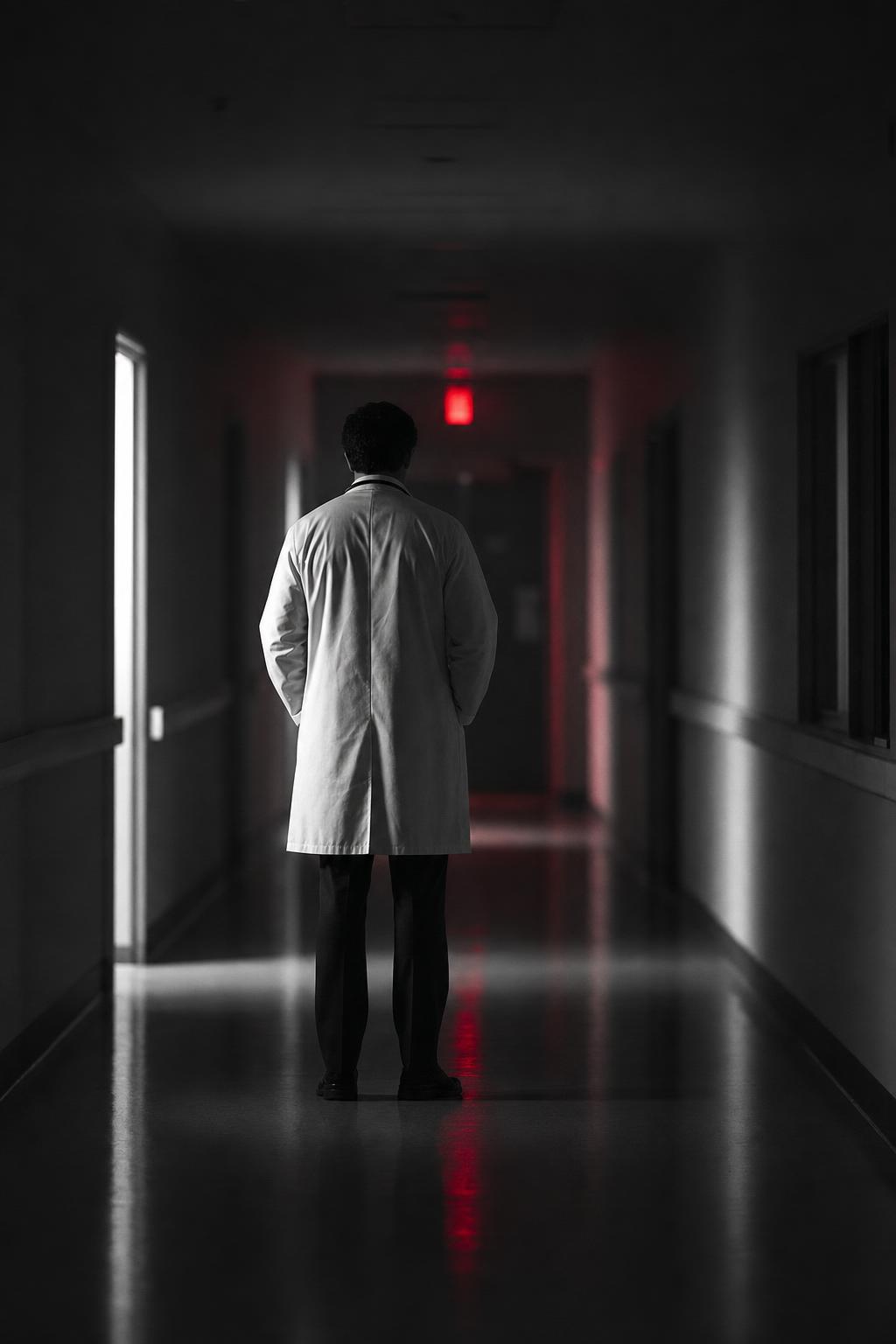
LECTURE TOPICS
A clinical topic library focused on the unstable patient, the thinly staffed shift, and the decision that has to be made now.
Separating wheeze, edema, gas exchange, and pressure support when both histories are real.
Recognizing early decompensation and starting the bundle before the numbers scream.
Rate versus rhythm at the bedside when cardiology is asleep.
Stabilization, transfusion thresholds, and when to wake up the endoscopist.
Reading the EKG, buying time, and knowing what actually lowers potassium.
A rapid structured workup when the differential is everything.
Making the escalation call before the crash.
Running the protocol solo without an ICU bed.
Goals-of-care decisions with families at the worst possible hour.
A fluids-pressors-source framework for undifferentiated shock.
VIDEOS
Get notified as soon as the next cases are published.
 COMING SOON
Recognizing early decompensation and starting the bundle before the numbers scream.
 COMING SOON
Rate versus rhythm at the bedside when cardiology is asleep.
 COMING SOON
Stabilization, transfusion thresholds, and when to wake up the endoscopist.
RESOURCES
 COMING SOON
Compact frameworks for stabilization, escalation, and reassessment.
 COMING SOON
High-yield reminders for the decisions that come up under pressure.
 COMING SOON
Scenario-based lessons built from the recurring problems of night coverage.
BLOG
 COMING SOON
What overnight practice teaches about uncertainty, ownership, and judgment.
 COMING SOON
A way to structure attention before the full story is available.
 COMING SOON
The practical gaps that appear when backup is distant and the floor is watching.
CONTACT
New lectures drop regularly. Leave your info and be the first to know - or send Dr. Blumengold a question or speaking request.
New lectures drop regularly.
GET ACCESS